

Overview
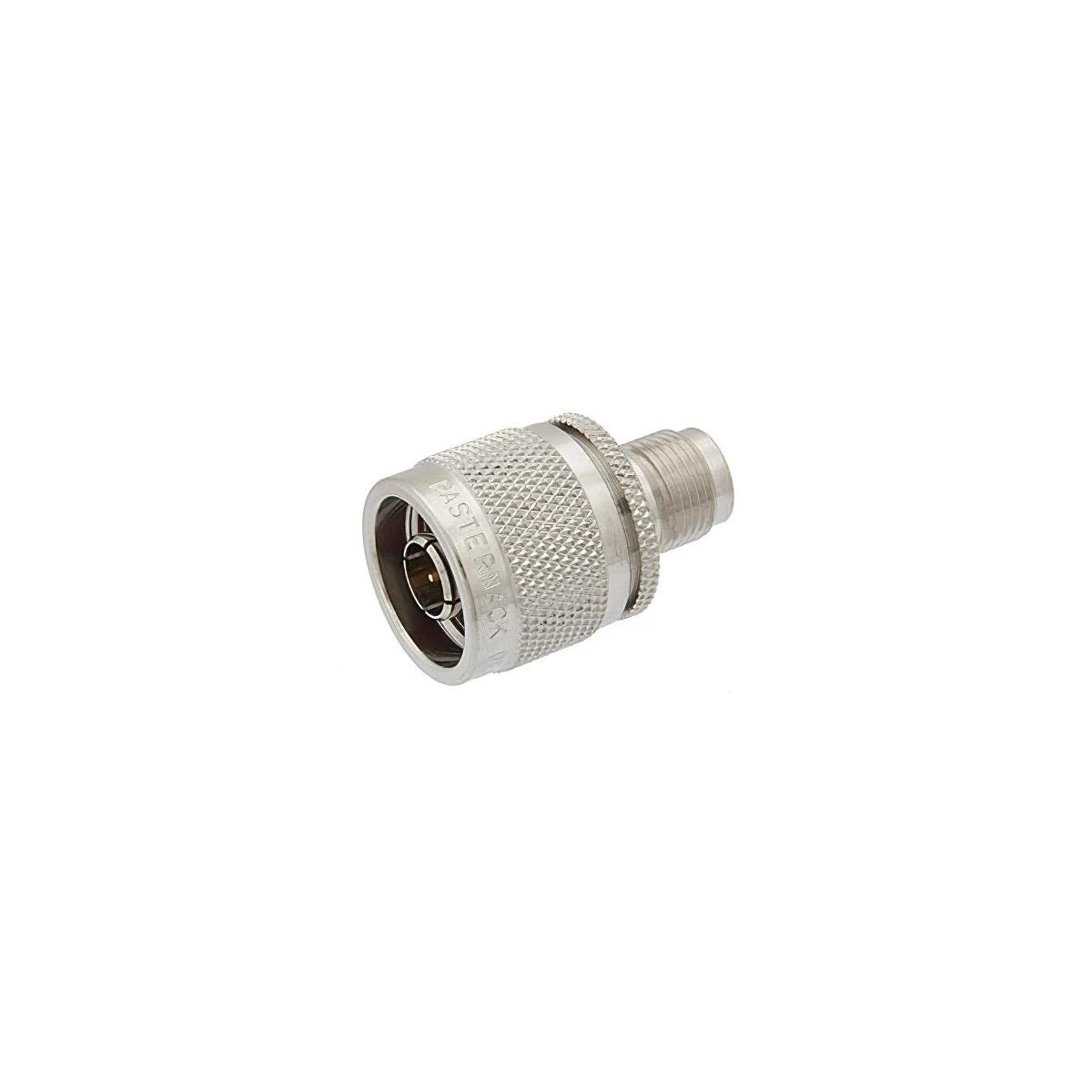
You’ve got an analyser with an N port. Your antenna cable ends in TNC. Now what? That’s the exact jam this little adapter gets you out of. The Pasternack PE9090 is a straight, in-line barrel — N Male on one end, TNC Female on the other — joining two common RF connector families in one twist. No new cable. Just screw it on and carry on.
It’s a between-series adapter, meaning it bridges two different connector types. Both ends are standard polarity to MIL-STD-348A, and the whole thing is rated at 50 ohms — the impedance nearly all RF test gear, amateur radio kit and antenna systems use. It works from DC up to 1,000 MHz, so VHF and UHF, FM and TV, two-way radio, GPS and GSM are all covered. Maximum VSWR is 1.5:1, so very little of your signal bounces back at the joint.
It’s built like a proper RF component, not a bargain-bin barrel. The body and coupling nut are brass with nickel plating, the contact is brass with gold plating of at least 30 microinches, the insulation is PTFE and the gasket is silicone. The whole adapter is 32.31 mm long, weighs 37.19 g, and keeps working from minus 65 to plus 165 degrees C. Lab bench, field kit, equipment rack. It doesn’t mind where you use it.
Key Benefits
Mismatch is the whole point. N and TNC are both everywhere in radio work, and they don’t mate with each other. Your analyser has an N port, your antenna cable ends in TNC, and without something in between you’re stuck. This adapter closes that gap. One piece, two threads, done.
Then there’s what it does to your signal — or rather, what it doesn’t do. A cheap unbranded adapter can add loss and reflection, and that shows up as measurement error on a spectrum analyser or shorter range on a radio link. The PE9090 is rated to a maximum VSWR of 1.5:1 across its full DC to 1 GHz range, so the readings you get are ones you can trust.
Look at the materials and you’ll see why it lasts. Gold on the contact resists corrosion, so the connection stays clean even after months in a kit bag. PTFE insulation stays stable across a wide temperature range instead of drifting when things get hot or cold. The nickel-plated brass body takes knocks, and the silicone gasket seals the joint against dust and moisture.
It’s a current, documented part, too. DigiKey still lists the PE9090 as Active — but with a 14-week manufacturer lead time if you order it in from abroad. That matters when you’re mid-job and can’t wait weeks for a part to ship. Here you’ve got the exact part number and a published Pasternack datasheet with real dimensions and ratings — numbers you can design around instead of guessing.
Features and Advantages
Electrically, it’s straightforward. Fifty ohms, DC to 1,000 MHz, 500 Vrms operating voltage, and a dielectric withstanding voltage of 1,500 Vrms. Insulation resistance is 5,000 Mohm. Those aren’t marketing numbers — they’re straight off Pasternack’s datasheet. Mechanically, the straight body keeps the signal path short and direct, and both ends fasten with threads, so the connection stays put once you’ve tightened it.
It’s a free-hanging, in-line adapter — no panel mount or bracket to fuss with. At 1.272 inches (32.31 mm) long and 0.787 inches (19.99 mm) wide, it adds almost no bulk to a cable run.
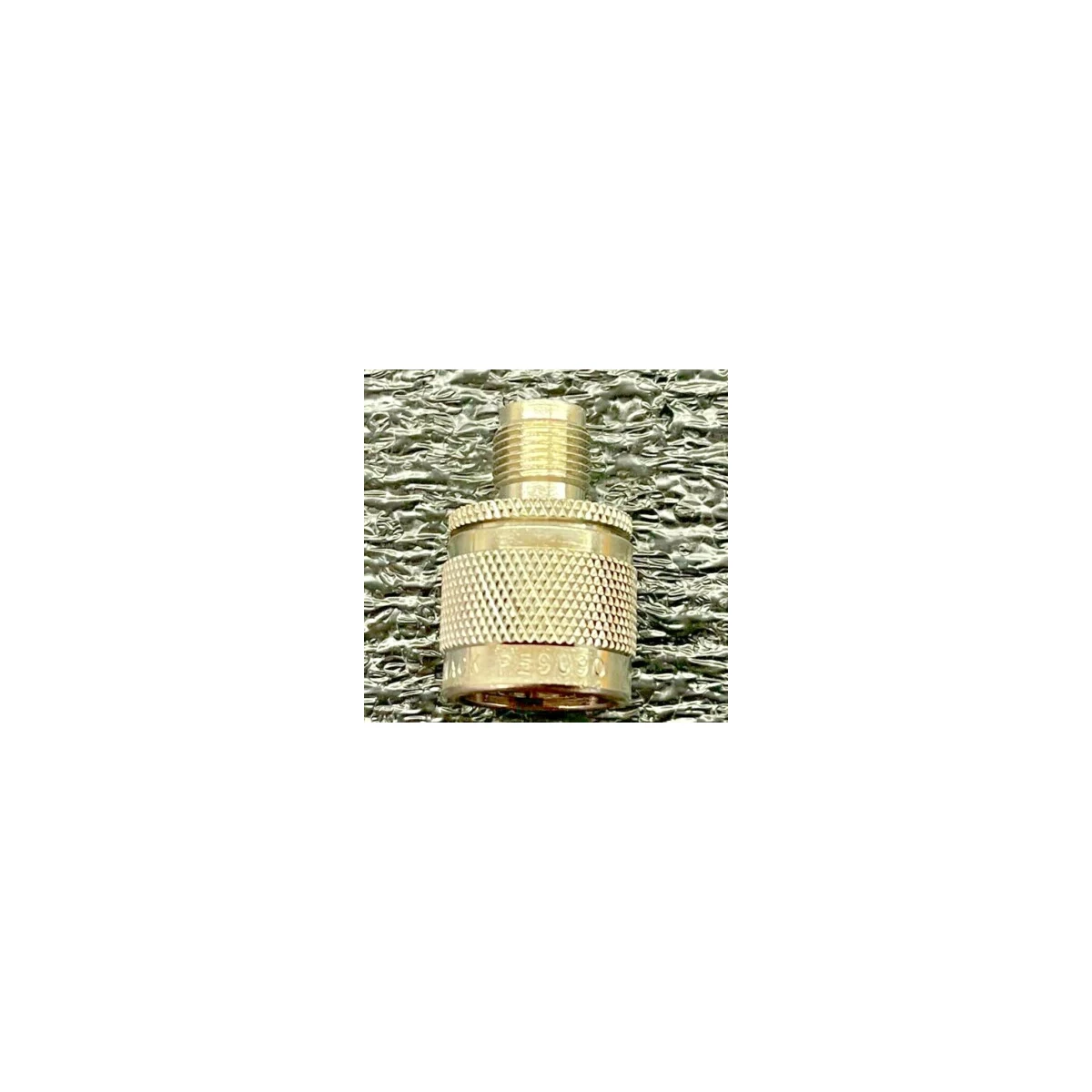
One thing to watch, though: Pasternack makes a whole family of look-alikes, and the part numbers are close enough to trip you up. The PE9089 is the reversed adapter — N Female to TNC Male — and it works to 6 GHz, so it’s a different part entirely. The PE9091, PE9099 and PE9098 are TNC-to-TNC or TNC-to-BNC parts — different jobs. Check the genders before you order. On this one, the N Male end is the bigger end with the visible coupling nut, and the TNC Female end is the smaller one.
Ideal Users
If you work with test gear, you’ll meet this mismatch sooner or later. Spectrum analysers, signal generators, network analysers, power meters — they mostly wear N connectors, while plenty of antennas, cables and devices under test end in TNC. The PE9090 hooks them together without swapping cables, and its documented VSWR keeps your measurements honest.
Amateur radio operators and two-way radio installers will get plenty of use out of it too. Radios, repeaters and antennas in the VHF and UHF bands mix N and TNC all the time, and this adapter’s DC to 1 GHz range covers the amateur 2 m and 70 cm bands plus common PMR and UHF allocations.
It suits hobbyists and students building RF projects as well — receivers, antennas, test setups where parts from different sources don’t share a connector. Just know its limits: it isn’t the right part for microwave work above 1 GHz, and it won’t help if you need the reversed genders. For that, you’d want the PE9089 instead.
Technical Specifications
| Specification | Details |
|---|---|
| Model | Pasternack PE9090 |
| Configuration | N Male to TNC Female, straight body, in-line, between-series |
| Impedance | 50 ohm |
| Frequency range | DC to 1,000 MHz (1 GHz) |
| Maximum VSWR | 1.5:1 |
| Operating voltage | 500 Vrms |
| Dielectric withstanding voltage | 1,500 Vrms |
| Insulation resistance | 5,000 Mohm |
| Connector 1 | N Male, MIL-STD-348A, standard polarity |
| Connector 2 | TNC Female, MIL-STD-348A, standard polarity |
| Contact material | Brass, gold plated 30 microinches minimum |
| Insulation | PTFE |
| Body and outer conductor | Brass, nickel 100 microinches minimum |
| Coupling nut | Brass, nickel |
| Gasket | Silicone |
| Length | 1.272 in (32.31 mm) |
| Width and height | 0.787 in (19.99 mm) |
| Weight | 0.082 lbs (37.19 g) |
| Operating temperature | Minus 65 to plus 165 degrees C |
FAQs
What does the PE9090 connect? It connects an N Male connector to a TNC Female connector. The larger N Male end, with the coupling nut, goes to the N Female port, and the smaller TNC Female end accepts a TNC Male plug.
What frequency range does it cover? DC to 1,000 MHz (1 GHz). That covers VHF, UHF, FM, TV, GSM, GPS and plenty of common radio and test work. It is not rated above 1 GHz.
Is this the same as the PE9089? No — and this is the mix-up that catches people. The PE9089 is the reversed adapter, N Female to TNC Male, and it works to 6 GHz. The PE9090 is N Male to TNC Female, to 1 GHz. Different genders, different range. Check both before you order.
Does it come with a warranty? No Pasternack warranty term was found for this part, so none is claimed in this listing. What you get is the adapter itself, built to the published Pasternack specification.
Why Buy From NexGenShop.pk?
Here’s the practical bit. The generic N Male to TNC Female adapters on import marketplaces in Pakistan ship in from the US and take at least 10 days to reach you — and they’re generic parts with no datasheet behind them. This page is for the exact Pasternack PE9090, rated DC to 1 GHz — not the reversed PE9089, not an unbranded look-alike. The specs here come from Pasternack’s own datasheet. The store delivers across Pakistan. Follow NexGenShop.pk on Facebook and Instagram for new stock and offers.
Final Conclusion
The Pasternack PE9090 is a simple part that does its job properly. It joins N and TNC equipment with a documented 50 ohm impedance, a DC to 1 GHz range and a maximum VSWR of 1.5:1, in a compact brass-nickel body with gold-plated contacts and PTFE insulation. It’s the adapter you reach for when a test setup, a radio link or an antenna feed needs N on one side and TNC on the other. At Rs 7,999, it’s a Pasternack part with real specifications behind it.

Reviews
There are no reviews yet.